
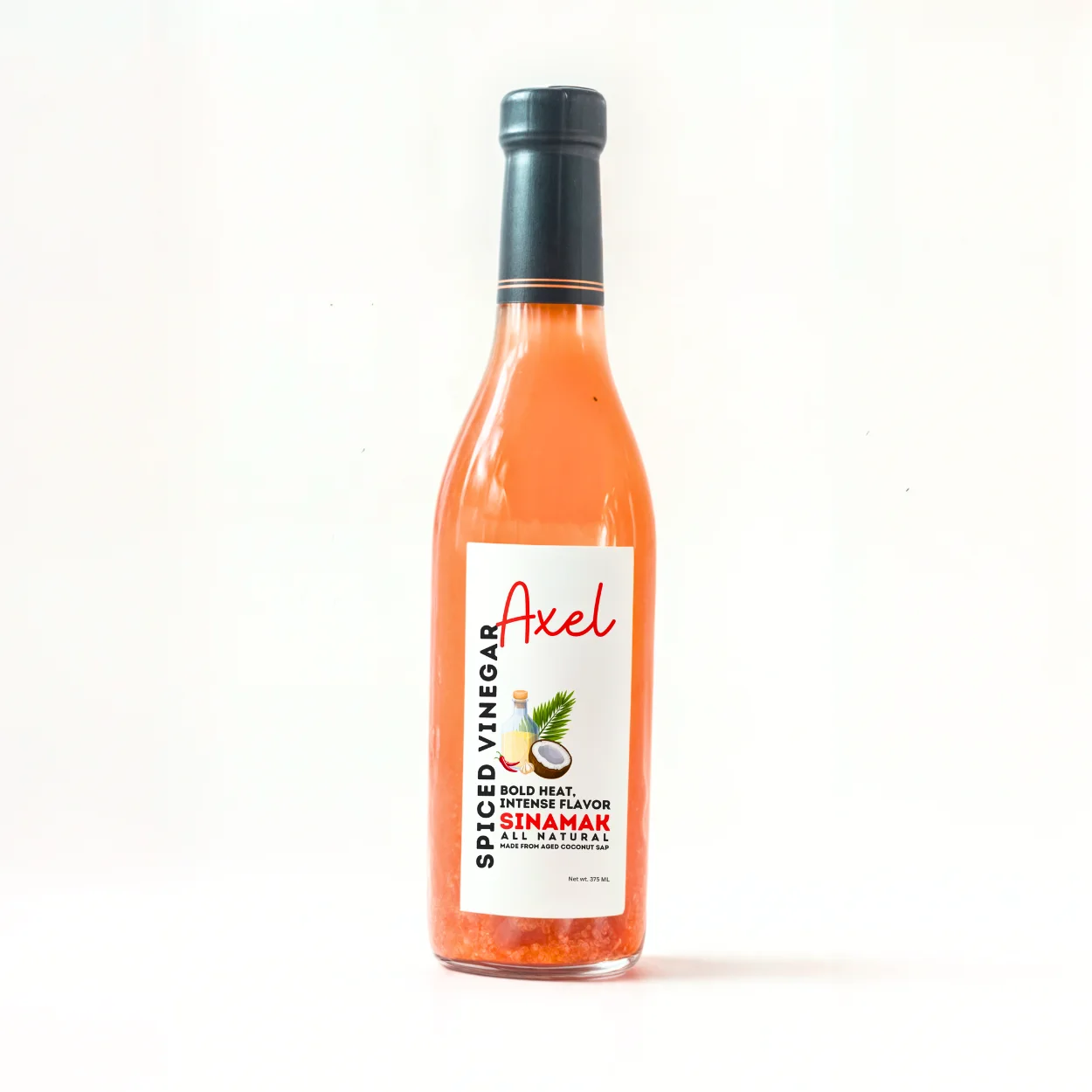
What Is Sinamak? A Guide to Filipino Spiced Vinegar
If you've ever eaten at a Filipino carinderia or joined a family gathering in the Philippines, you've probably seen a small bottle of cloudy, amber liquid sitting on the table next to the soy sauce and fish sauce. That's sinamak — and it's far more than just vinegar.
What Is Sinamak?
Sinamak (also spelled sinamak or sinamak) is a traditional Filipino spiced coconut vinegar. It's made by infusing coconut nectar vinegar with fresh aromatics — typically chili peppers, garlic, ginger, and sometimes turmeric or onion.
The word "sinamak" comes from the Visayan word "samak," referring to the process of infusing or steeping ingredients in vinegar. It's a staple condiment in households across the Visayas and Mindanao, particularly in Samar, Leyte, and Cebu.
How Sinamak Is Made
At Axel Farm, our sinamak starts with coconut nectar vinegar — vinegar made from the fresh sap of coconut blossoms, naturally fermented. This gives it a smoother, less acidic taste compared to grain-based vinegars.
The vinegar is then infused with:
- Fresh chili peppers — for heat (siling labuyo for regular, Carolina Reaper for extra heat)
- Garlic — for savory depth
- Ginger — for warmth and aroma
- Turmeric — for color and earthy notes
The ingredients steep together, allowing the flavors to meld into a bold, tangy, and aromatic condiment.
How to Use Sinamak
Sinamak is incredibly versatile. Here are the most common ways Filipinos use it:
1. Dipping Sauce (Sawsawan)
The most classic use. Pour sinamak into a small saucer and dip fried food into it. It pairs perfectly with:
- Fried chicken or pork chop
- Fried fish (tilapia, bangus, galunggong)
- Grilled pork belly (liempo) or chicken inasal
- Lumpia (spring rolls)
- Fried tofu
2. Marinade
Use sinamak as a marinade for grilled meats. The acidity tenderizes while the spices infuse flavor. Marinate pork, chicken, or seafood for 30 minutes before grilling.
3. Salad Dressing
Whisk sinamak with a little coconut oil for a quick Filipino-style vinaigrette. Great on fresh greens, cucumber salad, or kinilaw (Filipino ceviche).
4. Noodle and Rice Dishes
A drizzle of sinamak adds brightness to pancit, fried rice, and noodle soups.
Sinamak vs. Regular Vinegar
| Aspect | Regular Vinegar | Sinamak |
| Base | Grains or diluted alcohol | Coconut nectar (naturally fermented) |
| Flavor | Sharp, one-note acidity | Complex — tangy, spicy, aromatic |
| Uses | Cooking, cleaning | Condiment, dipping, marinade |
| Ingredients | Vinegar only | Vinegar + chili, garlic, ginger, turmeric |
Why Choose Coconut Nectar Vinegar?
Coconut nectar vinegar is made from the sap of coconut blossoms — the same sap used to make coconut sugar and coconut nectar. It's:
- Naturally fermented — no artificial accelerants
- Rich in nutrients — contains amino acids, vitamins, and minerals
- Lower acidity — smoother on the palate (approx. 4-6% acetic acid)
- Farmer-sourced — supports coconut farming communities in Samar
Our Sinamak Products
At Axel Farm, we offer two sinamak varieties:
Axel Sinamak – Spiced Coconut Vinegar
Our classic sinamak with a balanced heat from traditional chili. Perfect for everyday sawsawan.
Axel Sinamak – Carolina Reaper Spiced Coconut Vinegar
For chili lovers who want serious heat. Made with Carolina Reaper, one of the world's hottest peppers.
Where to Buy
You can order sinamak directly from our online store. We ship nationwide from Samar.
Behind Every Bottle Is a Farmer — Axel Integrated Farm, Talalora, Samar