
Ube Goes Global: How the Purple Yam Trend Is Putting Filipino Farmers in the Spotlight
From Samar Soil to the Global Stage
In April 2026, CNBC reported that the Philippines shipped approximately $3.2 million worth of ube in 2025 — nearly 1.7 million kilograms of purple yam, marking a roughly 20% increase from the prior year. The global ube market, valued at over $520 million in 2026, is projected to reach $830 million by 2033 according to market analysts.
Google search interest for ube spiked dramatically in early 2026. Food media has crowned it "the matcha successor." Innova Market Insights placed visually striking ingredients like ube at the center of their 2026 "Layers of Delight" trend, noting that 60% of consumers are drawn to colorful, photogenic foods. Ube is no longer just a Filipino pantry staple — it's a global culinary movement.
Why Ube Is Having Its Moment
Several factors are driving ube's global rise. The purple yam's naturally vibrant color makes it a social media darling — its deep violet hue creates visually stunning desserts, lattes, and baked goods that perform well on Instagram and TikTok. Its mild, sweet, nutty flavor profile is accessible to global palates while remaining distinctly Filipino.
Health-conscious consumers are also drawn to ube's natural qualities. Unlike artificial purple food coloring, ube delivers real antioxidant benefits from anthocyanins — the same compounds found in blueberries. It's gluten-free, high in fiber, and rich in vitamins C and A. As the clean-label movement grows worldwide, whole-food ingredients like ube are increasingly prized over processed alternatives.
What This Means for Samar Farmers
For farming communities in Eastern Visayas, the ube boom represents real opportunity. Samar's volcanic soil and tropical climate produce some of the finest purple yam in the Philippines. Yet for decades, ube farming remained a mostly local enterprise, with limited access to national and international markets.
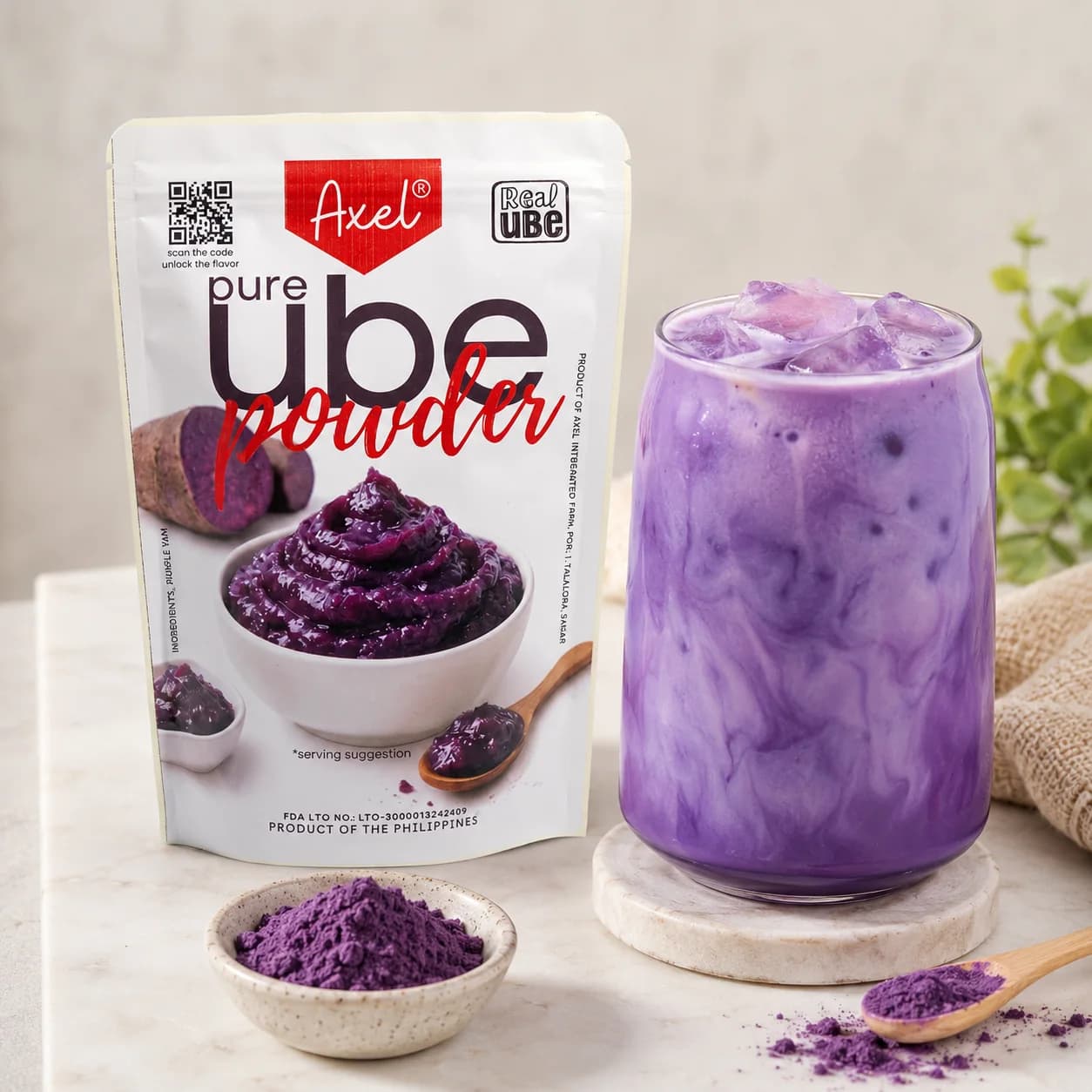
At Axel Integrated Farm in Talalora, Samar, we've been working to change that. Our Pure Ube Powder — made from sun-dried, ground Samar-grown purple yam — brings the authentic taste of Filipino ube to kitchens everywhere. Whether you're making traditional ube halaya, baking ube cheese pandesal, or crafting an ube latte at home, our powder delivers the real thing.
We also produce Ube Chips — crispy, sweet-savory snacks that showcase the natural color and flavor of Samar's purple yam. Every bag is a direct line from farm to table, supporting the farmers who tend these fields.
Ube Around the World
The global appetite for ube is reshaping how Filipino food is perceived internationally. Transparency Market Research projects the ube market will grow at 6.9% annually through 2035. In Germany, market analysts at VoVan Global declared in May 2026 that "ube — the purple yam root from the Philippines — has officially arrived in the DACH market." The trend, which began in the United States around 2016, has now spread across Europe, Asia, and the Middle East.
For Filipino food brands, this is a watershed moment. The world is discovering what Filipinos have known all along: ube is special. It's not just an ingredient — it's a piece of Filipino identity, rooted in the soil of provinces like Samar.
How to Enjoy Ube at Home
Whether you're a longtime fan or new to the purple yam, here are some ways to enjoy real Samar-grown ube:
- Ube Halaya: The classic Filipino purple yam jam. Use Pure Ube Powder for a faster, no-grate method.
- Ube Latte: Whisk ube powder with warm milk for a vibrant, caffeine-free drink.
- Ube Baked Goods: Add ube powder to pancake batter, cookie dough, or bread recipes for natural color and flavor.
- Ube Chips Snacking: Our Ube Chips are perfect straight from the bag — great for lunchboxes, road trips, or pasalubong.
The Future Is Purple
As global demand for ube continues to climb, the farmers of Samar stand ready. The purple yam trend isn't just about food fads — it's about recognition for a crop that has sustained Filipino families for generations. Every ube product that leaves Samar carries with it the story of the land and the people who cultivate it.
Behind Every Bottle Is a Farmer. — Axel Integrated Farm, Talalora, Samar