
Coconut Balsamic Vinegar: A Complete Guide

Coconut Balsamic Vinegar: A Complete Guide

You've heard of traditional balsamic vinegar — aged in wooden barrels, sweet and complex. But have you tried a balsamic made from coconut?

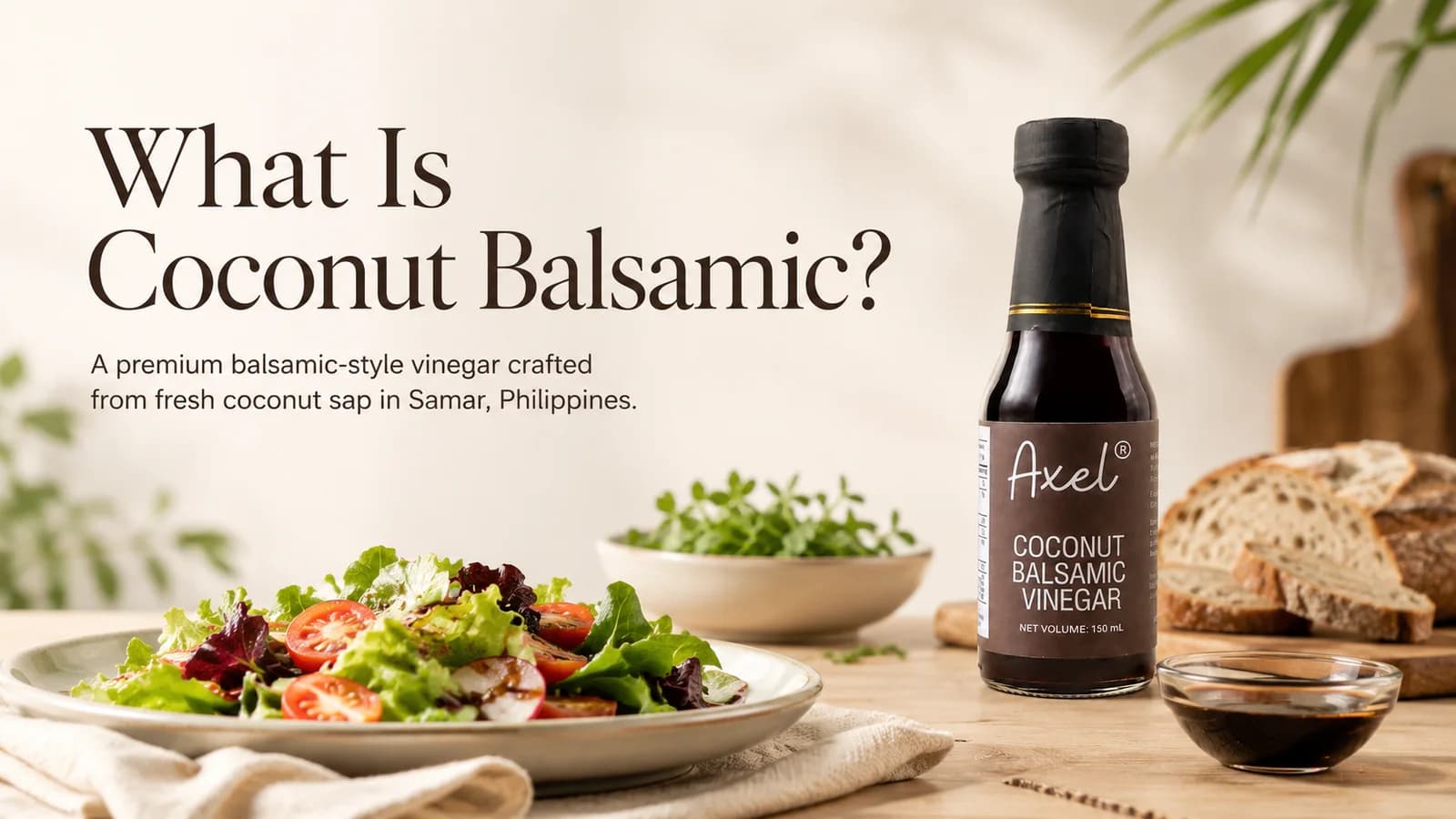
Welcome to Axel Coconut Balsamic Vinegar — a premium balsamic-style vinegar crafted from fresh coconut sap in Samar, Philippines. It's everything you love about balsamic, with a distinctly Filipino origin and a flavor that chefs and home cooks alike are falling for.

What Is Coconut Balsamic?

Coconut Balsamic is a naturally fermented vinegar made from fresh coconut sap — the same sap used to make coconut sugar and coconut nectar. But unlike regular coconut vinegar, it undergoes a longer fermentation and careful reduction process that concentrates its flavor, giving it:

  • Rich, dark amber color — similar to traditional balsamic
  • Smooth, tangy acidity — gentle on the palate, not harsh
  • Subtle natural sweetness — from the coconut sap itself
  • Complex, full-bodied flavor — with depth and character

The result is a vinegar that bridges the gap between a classic balsamic and a traditional Filipino coconut vinegar — unlike anything else on the market.

How It's Made

The process starts the same way as all Axel Farm vinegars — with skilled farmers in Talalora, Samar, climbing coconut trees at dawn to collect fresh sap from coconut blossoms.

The sap is naturally fermented, allowing native yeasts to convert the sugars into acetic acid. But for Coconut Balsamic, the vinegar is then aged and carefully reduced, concentrating its flavor and deepening its color. The result is a vinegar with a richer body and smoother finish than standard coconut vinegar.

No additives. No artificial colors. No shortcuts. Just time, patience, and traditional craft.

How to Use Coconut Balsamic

This versatile vinegar can be used in countless ways. Here are our favorites:

1. Balsamic Vinaigrette

Whisk 3 parts Coconut Balsamic with 1 part coconut oil, a touch of honey, salt, and pepper. Drizzle over fresh greens, roasted vegetables, or heirloom tomatoes. The mild sweetness balances the acidity beautifully.

2. Glazes & Reductions

Simmer Coconut Balsamic in a pan until it thickens into a syrupy glaze. Brush over grilled pork, chicken, salmon, or roasted vegetables during the last few minutes of cooking. The natural sugars caramelize beautifully.

3. Dipping Sauce

Serve Coconut Balsamic as a dipping sauce for crusty bread, cheeses, or grilled meats. Its smooth acidity and natural sweetness make it a crowd-pleaser.

4. Desserts

Drizzle over vanilla ice cream, fresh strawberries, or mango. The tangy-sweet flavor cuts through the richness and makes for an unexpectedly delicious pairing.

5. Marinades

Combine with garlic, herbs, and coconut aminos for a marinade that tenderizes while adding deep flavor. Works beautifully with chicken, pork, and firm fish.

Why Choose Axel Coconut Balsamic?

  • Coconut-based — A unique balsamic-style vinegar you won't find anywhere else
  • Naturally sweet — No added sugar, the sweetness comes from coconut sap
  • Chef-grade quality — Complex enough for fine dining, accessible enough for everyday cooking
  • Farmer-made in Samar — Supports coconut farming communities in the Philippines

Try It Today

Our Axel Coconut Balsamic Vinegar is available in 150mL and 375mL bottles. Also explore our full range of coconut vinegars — including Sukang Waray, Cocestra, and our Sinamak spiced vinegars.

Behind Every Bottle Is a Farmer — Axel Integrated Farm, Talalora, Samar

Back to blog